Virality doesn’t come with safety controls
In Trust and Safety, we often talk about harmful content, policy violations, and enforcement actions.
But there’s another category of risk that doesn’t always start as a violation.
It starts as a normal post.
No abuse.
No hate.
No clear policy breach.
Just content that suddenly… explodes.
I’ve seen this happen multiple times.
A post goes viral overnight.
The creator becomes instantly visible.
And then, things spiral.
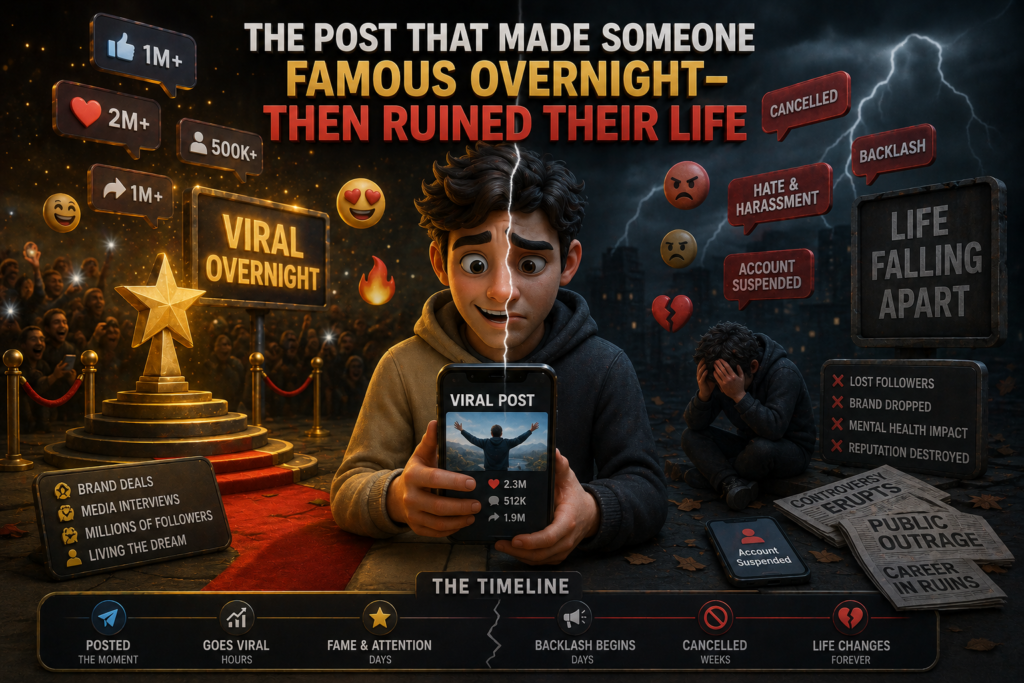
The Day Everything Changed
A few months ago, we came across a case that looked harmless at first.
It was a short video. Simple, relatable, slightly emotional. Nothing unusual.
The creator had a small following. A few hundred views per post. Nothing major.
Then one day, the algorithm picked it up.
Within hours:
- Views crossed 100K
- Comments flooded in
- Shares increased rapidly
By the end of the day, it had crossed a million.
From the outside, this looks like success.
From inside Trust and Safety, it’s when we start watching closely.
What Happens After Virality
The first wave is usually positive.
- Supportive comments
- New followers
- Encouragement
Then comes the second wave.
This is where things change.
People start digging:
- Who is this person?
- Where are they from?
- Is this story real?
Then the tone shifts.
- Doubts
- Criticism
- Mockery
And finally, the third wave.
This is where it gets serious.
- Personal attacks
- Harassment
- Doxxing attempts
- Misuse of personal information
The same post that made someone visible now makes them vulnerable.
A Real Scenario: From Fame to Fear
In this case, within 48 hours:
- The creator’s personal details were being shared in comments
- Old content was being pulled out and criticized
- People started messaging them aggressively
Nothing in the original post violated policy.
But the response to the post created a safety issue.
When we reviewed escalation tickets, one thing stood out.
The creator had stopped posting.
Then they reported:
“I didn’t expect this. I’m scared to open the app.”
That’s when you realize —
Virality isn’t always positive.
The Platform Perspective
From a system point of view, everything was working as expected:
- The algorithm promoted engaging content
- Users interacted with it
- Reach expanded organically
There was no “failure” in the system.
But from a user safety perspective, something was off.
Because visibility scaled faster than protection.
Why This Happens
Virality creates three immediate gaps:
1. Exposure Gap
The creator goes from being unknown to highly visible overnight.
But their ability to handle attention doesn’t scale at the same speed.
2. Context Collapse
Content meant for a small audience reaches a massive, diverse group.
Different people interpret it differently:
- Some relate
- Some misunderstand
- Some intentionally distort
3. Protection Delay
Safety systems are often reactive:
- Moderation happens after reports
- Interventions happen after escalation
But by the time action is taken, damage may already be done.
Another Scenario: The Meme That Backfired
We had another case where a user posted something meant as humor.
It was picked up widely and turned into a meme.
At first, the creator enjoyed the attention.
Then:
- Edits of their content started circulating
- Their identity became part of the joke
- Comments turned personal
The content itself didn’t break any rules.
But the scale changed its impact.
Eventually, the user deleted their account.
The Invisible Risk
What makes this problem difficult is that it doesn’t always start as a violation.
There’s no clear trigger like:
- Hate speech
- Graphic content
- Explicit abuse
Instead, it’s a shift over time.
From:
Attention → Scrutiny → Targeting
And that transition is often fast.
What I Learned From These Cases
One of the biggest lessons for me was this:
Safety is not just about content. It’s about scale.
A piece of content that is safe at 1,000 views may not be safe at 1 million.
Because the audience changes.
And with it, the risk.
What We Started Doing Differently
After seeing repeated patterns, we made some shifts in how we approached such cases.
1. Early Monitoring of Viral Content
Instead of waiting for reports, we started tracking rapidly growing posts.
High velocity became a signal.
Not of violation — but of potential risk.
2. Comment Section Focus
Often, the harm isn’t in the post but in the comments.
We increased monitoring on:
- Toxic comment spikes
- Personal information sharing
- Coordinated behavior
3. Creator Protection Signals
We looked for signs like:
- Sudden follower spikes
- Increased mentions
- Rapid engagement shifts
These helped identify users who might need support.
4. Faster Escalation Paths
When risks were identified, action needed to be quick.
Delays in such cases amplify harm.
5. Awareness in Teams
We started discussing virality not just as growth — but as a risk factor.
This changed how teams perceived “successful” content.
The Human Side We Don’t See
One thing that often gets missed in discussions about virality is the human impact.
From the outside:
- More views = success
- More followers = growth
But for the person behind the account, it can feel very different.
Sudden attention can mean:
- Loss of privacy
- Constant scrutiny
- Emotional stress
Not everyone is prepared for that.
And platforms don’t always give users control over how fast they grow.
A Simple Analogy
Think of virality like a spotlight.
In a small room, it feels warm and encouraging.
But if the spotlight suddenly becomes too bright, too wide, and too intense, it becomes uncomfortable.
And if you can’t step out of it, it becomes overwhelming.
That’s what uncontrolled visibility can feel like.
What Leaders Should Think About
If you’re working in Trust and Safety, this is worth asking:
- Are we treating virality only as success?
- Do we have signals for “risky growth”?
- Are we protecting users before harm happens — or after?
- Are we looking beyond the content to the impact?
These questions matter more as platforms scale.
Final Thought
Not every viral post is a success story.
Some are turning points — just not in the way we expect.
A single post can change someone’s life overnight.
But without the right safeguards, that change can come with consequences.
In Trust and Safety, our job isn’t just to remove harmful content.
It’s to understand how systems amplify risk — even when content looks harmless.
Because sometimes, the most dangerous outcomes don’t start with bad content.
They start with good content… that spreads too fast.