From someone working in Trust & Safety
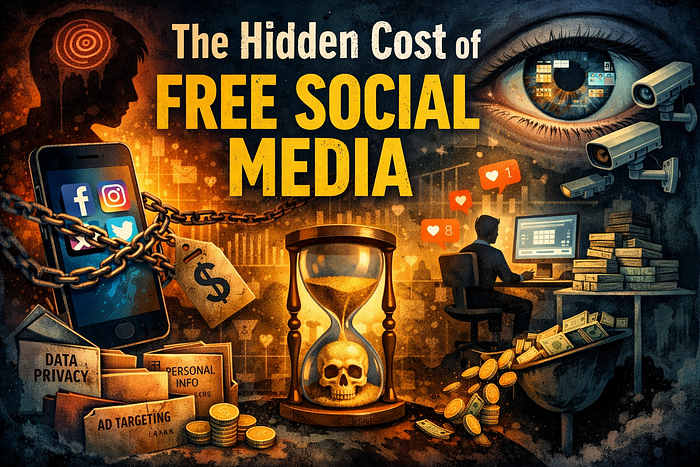
We love the word “free.”
Free accounts. Free posting. Free messaging. Free global reach.
Social media feels like an open playground where anyone can speak, connect, and build influence without paying a subscription fee.
But after working in Trust & Safety, I’ve learned something uncomfortable:
Free doesn’t mean without cost.
It just means someone else is paying.
1. If You’re Not Paying, You’re the Product
Most large social platforms run on advertising.
That means attention is currency.
The longer you scroll, the more data is generated. The more data is generated, the more targeted the ads. The more targeted the ads, the more revenue the platform earns.
This creates an incentive structure.
Content that keeps you engaged gets amplified. Emotional reactions drive engagement. Controversy spreads faster than nuance.
The hidden cost isn’t money.
It’s influence over your attention.
2. Safety Is Expensive
Here’s something most users don’t see.
Moderation is not cheap.
Trust & Safety teams, AI infrastructure, legal consultations, investigations, policy development. All of it requires massive investment.
Every piece of harmful content removed represents time, systems, and people behind the scenes.
But platforms must balance safety spending with business sustainability. Over-moderate and users feel censored. Under-moderate and users feel unsafe.
Free access increases scale. Scale increases risk. Risk increases cost.
The tension never disappears.
3. The Psychological Trade-Off
Algorithms are optimized to keep users engaged. And what keeps people engaged is often not calm, balanced discussion. It’s outrage. Comparison. Fear. Aspiration.
Over time, this environment shapes perception.
Users may believe extreme views are more common than they are. They may compare their lives to curated highlights. They may feel constant urgency to respond, defend, or perform.
The platform is free.
But your emotional energy is not.
4. Privacy Isn’t Simple
Free platforms rely on data.
Data improves recommendations. It personalizes feeds. It makes content feel relevant.
But data collection raises questions about boundaries, consent, and long-term digital footprints.
From inside Trust & Safety, I’ve seen how seriously privacy frameworks are taken. But I’ve also seen how complex they are.
Convenience and personalization come with trade-offs.
Free access often means data-driven design.
5. The Cost of Virality
Another hidden cost is amplification.
When something harmful spreads, removal does not erase impact. Screenshots travel. Clips get reposted. Narratives stick.
Free publishing tools empower voices. They also empower bad actors.
The infrastructure that allows creativity at scale also allows manipulation at scale.
The Real Price
I don’t say this to suggest social media is inherently harmful.
It connects families across continents. It builds businesses. It creates movements. It gives marginalized voices reach.
But it is not truly free.
The cost is paid in attention, data, psychological exposure, and constant moderation efforts happening behind the scenes.
From inside the system, I can say this: platforms are continuously trying to balance growth, safety, expression, and sustainability.
That balance is fragile.
Free social media feels effortless.
But maintaining it safely is one of the most expensive and complex challenges in the digital world.
And most of that cost stays invisible to the people scrolling.