When people ask what I do, I usually say, “I work in Trust and Safety.”
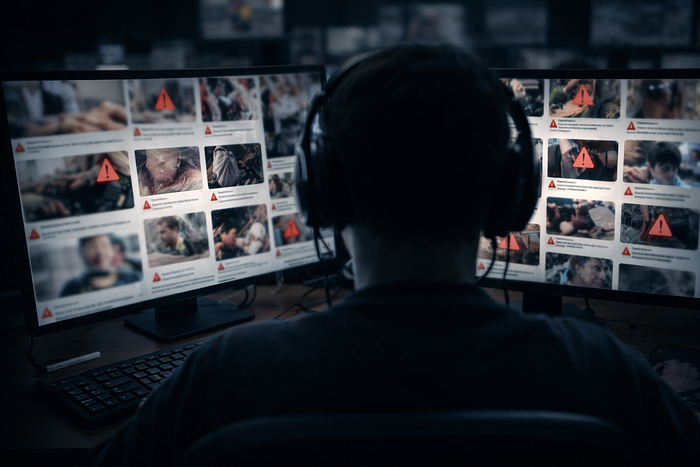
Scroll. Like. Share. Repeat. 😊
For most people, the internet feels effortless. Clean feeds, relevant posts, and content that “just works.”
But behind that smooth experience, there’s a layer most users never see.
That layer is content moderation.
And as someone who has spent years in Trust & Safety, I can tell you this honestly:
👉 What content moderators really see is very different from what the world imagines.
It’s Not Just “Removing Bad Content” 🤔
When people hear “content moderation,” they usually think:
“Okay, they just delete harmful posts.”
Simple, right?
Not even close.
Every piece of content sits on a spectrum:
- Clearly safe 🙂
- Clearly violating 🚫
- And a huge grey area in between 😐
And that grey area? That’s where moderators spend most of their time.
Scenario 1: The Joke That Wasn’t Funny 😶
I remember reviewing a post that looked harmless at first glance.
It was framed as humor. Lots of laughing emojis. Casual tone.
But the context?
- It targeted a specific group
- It encouraged subtle harassment
- It normalized harmful behavior
Now here’s the challenge:
Was it a joke?
Or was it harmful content disguised as humor?
There’s no button that says “detect intent.”
So moderators ask:
- Who is the target?
- What is the impact?
- How might others interpret this?
💡 What moderators really see: Intent is rarely obvious.
Scenario 2: The “One-Second” Decision That Takes Five Minutes ⏱️
From the outside, it looks like moderators just click buttons quickly.
Approve. Reject. Move on.
But here’s a real situation:
A 20-second video lands in the queue.
Within it:
- A fast-moving scene
- Blurry visuals
- Possible policy violation for just 2 seconds
Now the moderator:
- Rewatches the clip multiple times
- Pauses at specific frames
- Cross-checks policy definitions
All this… for a decision that looks instant on the dashboard.
💡 What moderators really see: Every second of content can carry risk.
Scenario 3: The Emotional Weight No One Talks About 😔
Let’s talk about the part that rarely makes it into reports.
Moderators don’t just see content.
They experience it.
Some days include:
- Disturbing visuals
- Aggressive language
- Sensitive or triggering material
And the hardest part?
You don’t get to “unsee” it.
I’ve seen teammates go silent after certain queues.
I’ve seen people take longer breaks than usual.
I’ve seen high performers struggle quietly.
But the dashboard only shows:
- SLA
- Productivity
- Accuracy
Not emotional impact.
💡 What moderators really see: Content doesn’t stay on the screen. It stays in the mind.
Scenario 4: The Appeal That Changes Everything 🔄
A decision is made. Content is removed.
Case closed?
Not always.
Then comes an appeal.
I remember one case where:
- The original content looked like a clear violation
- Action was taken confidently
But during appeal:
- New context was provided
- The intent became clearer
- The decision had to be reversed
This is where moderation becomes humbling.
💡 What moderators really see: Every decision can be challenged—and sometimes, corrected.
Scenario 5: Policy vs Reality ⚖️
Policies are detailed. Structured. Logical.
But real-world content?
Messy.
Example:
A post may technically follow policy wording
…but still feel harmful in context
Or:
A post may look offensive
…but fall under allowed categories like satire or awareness
Moderators constantly balance:
- Policy rules 📘
- Human judgment 🧠
- Platform impact 🌍
💡 What moderators really see: Policy is the guide, not the full answer.
The Pressure Behind the Screens 😬
Moderators don’t just review content.
They work under constant pressure:
- SLA targets ⏱️
- Productivity goals 📊
- Quality benchmarks 🎯
Imagine doing all of this while:
- Making high-stakes decisions
- Handling sensitive content
- Staying consistent across hundreds of cases daily
One small mistake can:
- Impact a user
- Escalate internally
- Affect platform trust
💡 What moderators really see: Every click carries responsibility.
The “Invisible Work” Problem 👀
Here’s something I’ve noticed over the years.
When moderation works well… nobody notices.
No one says:
“Wow, my feed is safe today!”
But when something slips through?
Everyone notices.
This creates a strange reality:
- Success is invisible 🙂
- Mistakes are visible 🚨
💡 What moderators really see: Their best work often goes unseen.
Scenario 6: The Volume Shock 😅
One day, everything is stable.
Next day:
- A viral trend explodes
- Content volume doubles
- Queues start piling up
Moderators suddenly deal with:
- Repetitive content
- Slight variations of the same violation
- Faster decision cycles
It becomes a test of:
- Consistency
- Focus
- Mental stamina
💡 What moderators really see: Scale changes everything.
What Makes a Great Moderator? 🌟
From my experience, it’s not just about speed or accuracy.
Great moderators:
- Stay calm under pressure
- Think critically, not mechanically
- Ask “why,” not just “what”
- Balance empathy with enforcement
They understand that behind every piece of content is:
- A person
- A context
- A potential impact
Changing How We See Moderation 🙂
If there’s one thing I wish more people understood, it’s this:
Content moderation is not just a process.
It’s a responsibility.
Moderators are not just reviewers.
They are decision-makers shaping:
- What stays online
- What gets removed
- What millions of users experience daily
Final Thought 💭
The next time you scroll through a clean, safe feed…
Pause for a second.
Behind that experience is someone who:
- Watched what you didn’t have to
- Decided what you didn’t see
- Took on the complexity so your experience feels simple
👉 That’s what content moderators really see.
And it’s a lot more than just content. 🙂