When people imagine content moderation, they often picture a universal rulebook.
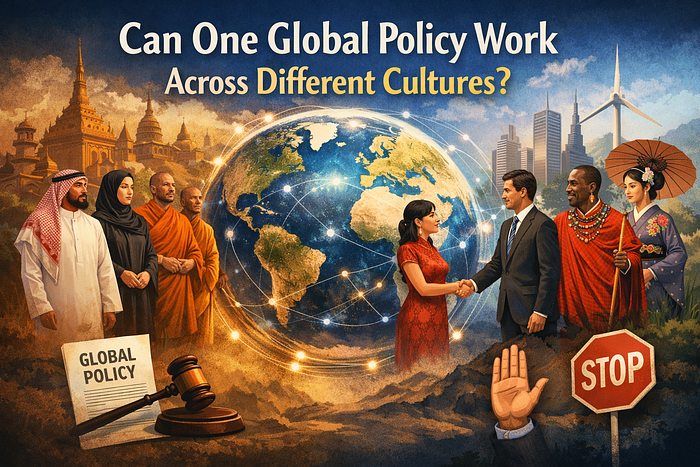
One global policy.
One standard.
Applied equally to everyone across the internet.
At first glance, that idea sounds fair.
If harmful content is harmful, shouldn’t the rules stay the same everywhere?
Working in Trust and Safety taught me that the answer is far more complicated.
Because moderation is not only about rules.
It’s about language, culture, politics, history, humor, religion, social norms, and human interpretation. And those things do not look the same across countries.
From the outside, moderation feels like a technology problem.
From the inside, it often feels like a cultural translation problem.
And that difference changes everything.
Why Global Policies Sound Ideal
Operationally, one global standard makes perfect sense.
A unified policy creates:
- Consistency
- Simpler reviewer training
- Clearer automation systems
- Easier escalation paths
- Faster enforcement
If hate speech is prohibited, then it should be prohibited everywhere.
If exploitation is harmful, geography shouldn’t determine whether action is taken.
There’s a moral simplicity in equal rules for all users.
Most platforms start with this idea:
Create one centralized policy framework that applies globally.
And honestly, without some level of standardization, moderation at internet scale would become chaos.
But the challenge begins the moment policy meets real-world culture.
Words Don’t Mean the Same Thing Everywhere
One of the first things I learned in Trust and Safety was this:
Translation does not equal meaning.
A word or phrase can carry completely different emotional weight depending on:
- Region
- Community
- Historical context
- Political climate
- Religious sensitivity
- Generational usage
I remember reviewing a case involving slang that appeared harmless in English translation. But regional reviewers immediately recognized it as coded hate speech commonly used in local online harassment groups.
Without local context, the content would likely have remained online.
I’ve also seen the opposite happen.
A phrase flagged aggressively by automation in one market was actually casual everyday humor in another region.
This is where global moderation becomes difficult.
Policies can define categories like:
- Harassment
- Hate speech
- Extremism
- Misinformation
But culture defines how people actually interpret them.
And culture rarely fits neatly inside policy language.
Symbols, Memes, and Gestures Change Meaning Across Regions
The internet moves faster than policy updates.
Symbols evolve constantly.
A hand gesture, meme template, emoji, or phrase may:
- Represent humor in one country
- Signal extremism in another
- Carry religious meaning elsewhere
- Be completely harmless to outsiders
I once escalated a case involving a visual symbol that looked insignificant globally but had become associated with violent political movements regionally.
Most users outside that country would never understand the context.
That’s the hidden challenge moderation teams face every day.
Platforms moderate global content, but meaning remains deeply local.
Humor and Satire Are Extremely Difficult to Moderate Globally
One of the hardest moderation categories is humor.
Because humor is cultural.
In some countries:
- Aggressive sarcasm is normal
- Public roasting is entertainment
- Political mockery is expected
In others:
- The same tone may be considered deeply offensive
- Public criticism may trigger safety concerns
- Religious satire may create serious backlash
I remember reviewing satire content during a politically sensitive period where local teams warned that a joke likely to be ignored internationally could escalate tensions locally.
From the outside, users often ask:
“Why remove a joke?”
Inside moderation systems, the real question becomes:
“What is the likely impact of this content in its actual environment?”
And that’s much harder to answer consistently.
Political Context Changes Moderation Decisions
This is where moderation becomes especially sensitive.
The same piece of content can produce completely different risks depending on local political conditions.
For example:
- A protest slogan may represent activism in one country
- The same slogan may trigger violence elsewhere
- Political misinformation may carry different levels of real-world harm during elections
- Historical conflicts can change how content is interpreted overnight
I worked during periods of major political unrest where escalation queues increased dramatically because even small pieces of content carried heightened offline risk.
Moderation decisions during these moments aren’t only about policy language anymore.
They become connected to:
- Public safety
- Regional stability
- Legal exposure
- Harm prevention
And this creates another challenge:
If platforms localize enforcement heavily, users accuse them of double standards.
If they apply rigid global standards everywhere, they risk ignoring local realities entirely.
Trust and Safety teams constantly operate between those two pressures.
Automation Still Struggles With Cultural Understanding
People often assume AI moderation systems solve these problems automatically.
In reality, automation struggles heavily with cultural nuance.
AI systems learn patterns from training data.
But training data itself reflects:
- Dominant languages
- Popular regions
- Existing biases
- Limited context
That means automation usually performs best in high-resource languages and weaker in underrepresented cultural environments.
I’ve seen automation:
- Misinterpret reclaimed language
- Miss coded regional hate speech
- Fail to recognize local misinformation trends
- Incorrectly flag harmless cultural expressions
The issue isn’t only technological.
It’s contextual.
AI can detect patterns.
But culture requires lived understanding.
And that gap creates many moderation mistakes online today.
Why Local Expertise Matters
This is why serious Trust and Safety operations rely heavily on regional expertise.
Behind moderation systems, there are often:
- Local language specialists
- Regional escalation teams
- Cultural consultants
- Policy adaptation groups
- Market-specific reviewers
Because effective moderation requires more than reading policy documents.
It requires understanding:
- Historical sensitivities
- Social tensions
- Political environments
- Local slang
- Behavioral trends
- Cultural humor
I’ve worked with reviewers from different countries who identified harmful context invisible to global teams simply because they lived inside that culture.
That local knowledge becomes critical for accurate enforcement.
So, Can One Global Policy Actually Work?
From my experience in Trust and Safety, the answer is:
Partially.
A single global framework is necessary for consistency.
Without it, platforms would struggle to scale enforcement at all.
But a global framework alone is not enough.
It needs:
- Local expertise
- Regional flexibility
- Cultural consultation
- Continuous policy adaptation
- Feedback from diverse markets
The most effective moderation systems are not purely global or purely local.
They combine both.
A global backbone.
With local intelligence layered on top.
The Internet Is Global. Human Experience Is Not.
One of the biggest lessons moderation teaches you is this:
The internet connects billions of people, but those people do not share one culture, one history, or one interpretation of harm.
And that reality makes moderation incredibly difficult.
Policies can attempt consistency.
But understanding requires context.
That’s why moderation is not simply about enforcing rules.
It’s about interpreting human behavior across cultures at enormous scale.
Final Thoughts
From the outside, moderation often looks like platforms choosing what people can and cannot say.
From inside Trust and Safety, it feels more like navigating endless cultural complexity under pressure.
Can one global content policy work?
Yes, but only to a point.
Because policies may be global.
But meaning is always local.
And bridging that gap between standardized rules and human reality is where the hardest moderation work truly happens.