It Looked Like a Normal Post
One post I reviewed during a fuel panic stayed with me.
A blurry image of a long queue at a petrol station. Caption:
“Fuel finishing soon. Fill now.”
If you look at it from an AI system’s perspective, nothing seems wrong.
No hate speech. No explicit misinformation. No policy-triggering keywords.
And that’s exactly the problem.
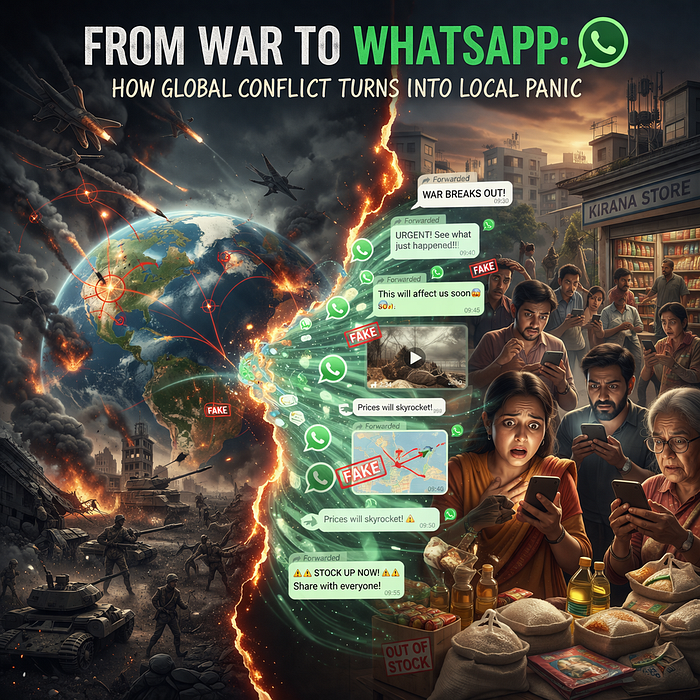
AI Sees Content. Humans See Context
During that situation, the image itself was real. There really was a queue.
But the reason wasn’t a shortage. A supply delay had caused temporary congestion in one area.
The post removed that context.
AI systems typically analyze what’s in front of them. Text, image, signals.
But they struggle with what’s missing.
From my experience, this is where crisis misinformation slips through. Not because AI is weak, but because context is not always visible in the content itself.
Timing Changes Everything
I’ve seen the same piece of content mean completely different things depending on when it appears.
A video of crowded petrol pumps during normal times? Not a big issue.
The same video during a global conflict affecting fuel supply? It becomes a trigger.
AI doesn’t always understand timing the way humans do.
It doesn’t “feel” urgency or connect events happening outside the platform in real time. It processes inputs, not situations.
And during crises, timing is everything.
Regional Sensitivity: One Size Doesn’t Fit All
Another challenge I’ve seen repeatedly is regional nuance.
In one case, fuel-related posts started trending in a specific region due to local supply chain disruptions.
But the AI system treated it as generic content.
It didn’t recognize that in that location, at that moment, such posts could lead to real-world panic.
People in that area reacted quickly. Queues grew longer. More images were posted. The situation escalated.
From a system perspective, nothing “new” was happening.
From the ground, everything was changing.
When Panic Becomes Data
Here’s where it gets even more complicated.
As more people rushed to petrol stations, new content started appearing. Photos of longer queues. Videos of crowded pumps.
AI systems often interpret engagement and repetition as signals of relevance.
But during crises, those signals can be misleading.
The panic creates content. That content reinforces panic.
And AI, unintentionally, becomes part of that loop by allowing similar content to continue circulating.
The Gap Between Detection and Impact
Even when AI flags or downranks certain posts, there’s a delay.
And in crisis situations, delays matter.
From what I’ve seen, by the time systems start identifying patterns, people have already acted. Tanks are filled. Supplies are strained. The behavior has moved offline.
At that point, moderation becomes reactive.
What This Really Means
AI moderation isn’t failing because it’s ineffective.
It’s failing because crises are dynamic, and human behavior is unpredictable.
Context changes meaning.
Timing changes impact.
Location changes sensitivity.
These are things AI is still learning to interpret.
The Reality From Inside
From the outside, it may seem like harmful content should be easy to catch.
From the inside, it’s different.
The most impactful posts during crises don’t look extreme. They look ordinary.
And that’s why they slip through.
Because in real-world crises, the danger isn’t always in what is said.
It’s in how, when, and where it is said.
That’s where AI still struggles.