From someone working inside Trust and Safety
I work with AI moderation systems every day.
They are fast. Efficient. Scalable.
They process volumes of content no human team ever could.
And yet, after years in Trust and Safety, I’m convinced of something simple:
Human judgment still matters. More than most people realize.
Not because AI is useless.
But because safety is not just a technical problem.
It’s a human one.
Moderation Is Not Just Rule Enforcement
From the outside, moderation looks mechanical.
Content violates a rule.
The rule is applied.
The content is removed.
In reality, most cases are not that clean.
Is this harassment or sarcasm?
Is this hate speech or someone quoting it critically?
Is this misinformation or a developing situation with incomplete facts?
Policies guide us. They provide structure. But they cannot predict every scenario.
Human reviewers interpret context, tone, intent, and cultural nuance. That interpretive layer is where judgment lives.
And that layer cannot be automated away completely.
Context Is Often Invisible to Machines
AI evaluates signals within a defined input. Text. Image. Audio. Metadata.
Humans evaluate context.
We look at:
- Account history
- Behavioral patterns
- Conversation threads
- Regional norms
- Escalation signals
- Off-platform impact
A single post rarely tells the full story.
Many enforcement decisions are shaped not by what is visible in isolation, but by what is visible across time.
Judgment connects dots. Automation often evaluates fragments.
Intent Changes Everything
One of the hardest parts of moderation is interpreting intent.
Two identical sentences can mean completely different things depending on who is saying them and why.
A reclaimed slur used within a community carries different weight than the same term used maliciously.
A graphic image shared for awareness differs from one shared to glorify harm.
AI detects patterns.
Humans assess intention.
And intention often determines whether something violates policy.
Ambiguity Is the Default, Not the Exception
Clear violations are easy.
The real operational pressure lives in grey areas.
Content that sits on the boundary.
Content designed to test the rules.
Content that technically complies but clearly manipulates.
These cases require discretion.
In my experience, this is where seasoned moderators add the most value. They develop calibrated judgment over time. They recognize subtle shifts in tone and behavior.
That expertise cannot be reduced to a confidence score.
Ethics Cannot Be Fully Quantified
Moderation decisions are not purely technical. They are ethical.
Remove too much and you restrict expression.
Remove too little and you enable harm.
Balancing safety and freedom requires value-based reasoning.
AI can be optimized for accuracy metrics.
Humans weigh societal impact.
That distinction matters more than we admit publicly.
Human Judgment Is Also Accountability
There’s another reason human oversight matters.
Accountability.
When a decision affects someone’s speech, income, or visibility, it should not rest solely on algorithmic output.
A human review layer creates:
- Transparency
- Escalation pathways
- Reasoned explanation
- Corrective feedback
Without that layer, enforcement becomes opaque and difficult to contest.
Trust in platforms depends not only on outcomes, but on process.
Experience Changes How You See Risk
After reviewing thousands of cases, moderators develop instinct.
Not emotional reaction.
Pattern-based intuition built from exposure.
You begin to notice emerging abuse tactics early. You sense when something is coordinated. You recognize when a seemingly small violation could escalate.
This type of risk awareness develops through experience.
It’s difficult to encode fully into a model.
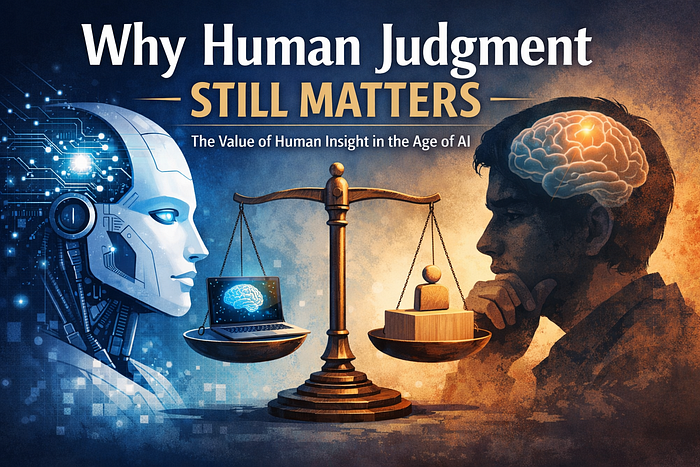
The Future Is Not Human vs AI
I don’t believe human judgment should replace AI.
And I don’t believe AI should replace human judgment.
The strongest systems I’ve seen are layered:
AI handles scale and clear violations.
Humans handle nuance and ambiguity.
Escalation teams handle high-risk edge cases.
Judgment and automation are not competitors. They are complementary.
But only if we design systems that respect both.
Final Thoughts
In Trust and Safety, every decision shapes what people see, what spreads, and what is normalized.
AI helps manage the scale.
Human judgment safeguards the meaning.
As long as platforms host real human expression, there will be cases that cannot be resolved by probability alone.
Because content moderation is not just about identifying patterns.
It’s about understanding people.
And that’s why human judgment still matters.