This is one of those questions people rarely ask publicly.
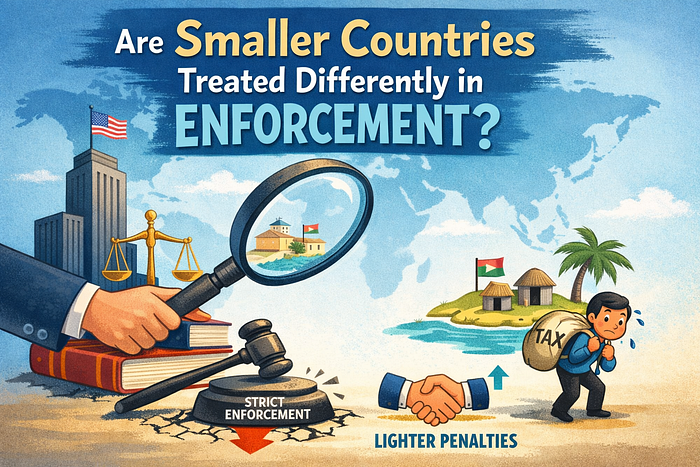
But inside Trust and Safety discussions, it comes up more often than you might expect:
Are smaller countries treated differently when it comes to content moderation?
After working in this space, I can say the answer is complicated.
Most platforms genuinely want global consistency. They want the same rules to apply everywhere. That’s the ideal.
But operational reality doesn’t always look ideal.
Because when moderation happens at internet scale, attention naturally follows:
- User volume
- Risk exposure
- Revenue impact
- Regulatory pressure
- Public visibility
And that creates differences in how enforcement systems evolve across regions.
Not always intentionally.
But practically.
Moderation Systems Prioritize Scale
One of the first things I learned in Trust and Safety is that moderation infrastructure is heavily driven by data volume.
Platforms allocate resources based on:
- Active users
- Content volume
- Engagement levels
- Market importance
- Risk frequency
Large markets naturally receive more investment.
That often includes:
- Dedicated regional moderation teams
- Local language experts
- Specialized policy examples
- Market-specific escalation processes
- Better-trained AI models
- Regional threat intelligence
Smaller countries usually operate with fewer dedicated resources.
I remember working on escalations involving regional slang from a smaller market where reviewers had to rely on translated context notes because there wasn’t a fully localized moderation framework available yet.
The policy itself existed globally.
But the local nuance support wasn’t equally mature.
That distinction matters more than people realize.
Language Coverage Is One of the Biggest Gaps
Language is probably one of the hardest moderation challenges online today.
For major global languages like English, Spanish, or Hindi, platforms often have:
- Extensive training datasets
- Localized policy guidance
- Specialized reviewers
- Advanced detection systems
- Historical enforcement patterns
But smaller languages often have limited machine-learning support.
And that creates two major risks.
1. Under-Enforcement
Harmful content may slip through because systems fail to recognize:
- Local insults
- Regional hate speech
- Coded language
- Political slogans
- Contextual threats
I’ve personally seen cases where automated systems completely missed harmful narratives simply because the language variation wasn’t well represented in training data.
The content looked harmless to non-native reviewers.
Locally, it carried serious meaning.
2. Over-Enforcement
The opposite problem also happens.
Automation or centralized teams may misunderstand:
- Humor
- Cultural slang
- Satire
- Reclaimed language
- Political commentary
Content gets flagged because systems interpret it too literally without cultural understanding.
And from the user perspective, both situations feel unfair.
Because they are.
Global Policies Don’t Always Translate Cleanly
One of the biggest misconceptions about moderation is the idea that policy language automatically works equally everywhere.
It doesn’t.
Policies define categories like:
- Hate speech
- Harassment
- Extremism
- Misinformation
- Violent threats
But local culture defines meaning.
I once reviewed a case involving political satire from a smaller regional community. To outside reviewers, it appeared aggressive and potentially hateful.
But local experts explained the language style was historically common in political humor within that region.
Without local context, enforcement would likely have been incorrect.
That experience reinforced something important:
Moderation is not just translation.
It’s interpretation.
And interpretation becomes much harder when local expertise is limited.
Smaller Countries Often Depend on Centralized Moderation
Large markets usually receive dedicated moderation structures.
Smaller markets may instead fall under:
- Broader regional moderation hubs
- Shared language coverage teams
- Centralized escalation units
Operationally, this makes sense.
But practically, it creates distance between enforcement systems and local realities.
A reviewer sitting thousands of kilometers away may understand platform policy perfectly while still lacking:
- Cultural sensitivity
- Historical awareness
- Regional political context
- Local humor patterns
That gap affects gray-area decisions heavily.
Especially during:
- Elections
- Social unrest
- Religious tensions
- Regional conflicts
And gray areas are where moderation becomes most difficult.
Regulatory Pressure Changes Platform Priorities
Another factor users rarely think about is regulation.
Countries with strong digital governance frameworks often receive faster platform attention.
Why?
Because regulation creates pressure.
When governments demand:
- Transparency reports
- Faster takedowns
- Child safety compliance
- Election integrity protections
- Local accountability
…platforms invest more aggressively in those regions.
I’ve seen policy updates and operational shifts happen very quickly in markets facing strong regulatory scrutiny.
Meanwhile, smaller nations with limited regulatory influence may experience slower localization improvements.
Not necessarily because platforms don’t care.
But because companies often respond fastest where:
- Legal risk is high
- Public scrutiny is intense
- Financial penalties exist
- Media attention is significant
That’s operational prioritization.
But from the user side, the outcome can still feel unequal.
And impact matters more than intent.
Reporting Behavior Also Shapes Enforcement
One thing many users underestimate is how much moderation systems depend on reporting signals.
In smaller markets:
- Users may trust reporting systems less
- Awareness about reporting tools may be lower
- Harmful behavior may become normalized locally
- Digital literacy gaps may exist
When fewer users report violations, platforms receive weaker signals about emerging risks.
That slows:
- Trend detection
- Policy adaptation
- Escalation awareness
- AI model improvement
I’ve seen harmful regional narratives remain under-prioritized simply because detection systems lacked enough reporting data to identify them early.
Moderation systems react to visibility.
And visibility often depends on users actively reporting harm.
Does This Mean Smaller Countries Are Ignored?
From inside Trust and Safety, I would not say smaller countries are intentionally ignored.
Most serious moderation teams genuinely try to create globally consistent enforcement.
But there’s a difference between:
- Having global rules
- Applying those rules with equal depth everywhere
And that’s where inequality often appears.
Because fairness in moderation is not just about policy existence.
It’s about:
- Language support
- Cultural understanding
- Reviewer specialization
- Regional investment
- AI training quality
- Escalation maturity
Smaller markets often receive less of those resources initially.
Not always because of bias.
But because scale drives operational focus.
The Industry Is Still Evolving
The good news is that platforms are becoming more aware of these gaps.
Over the last few years, Trust and Safety teams have increasingly invested in:
- Regional language expertise
- Cross-cultural policy reviews
- Local escalation frameworks
- Market-specific safety operations
- Improved multilingual AI systems
But the industry is still evolving.
And honestly, complete global parity remains extremely difficult.
Because the internet may be global.
Human communication is not.
Final Thoughts
Working in Trust and Safety taught me something important:
True fairness in moderation is not just about applying the same rules everywhere.
It’s about applying those rules with equal precision, cultural understanding, and operational investment across every region.
And right now, that balance is still uneven.
Not always intentionally.
But structurally.
Smaller countries often face:
- Less localized moderation
- Weaker language coverage
- Slower policy adaptation
- Reduced contextual understanding
Acknowledging that reality is important.
Because platforms cannot improve gaps they refuse to recognize.
The goal of global moderation should not only be consistency.
It should also be equity in how safety systems understand the people they are trying to protect.