When people think about content moderation, they often imagine a simple system: a set of rules applied equally to everyone.
In reality, moderation at global platforms is far more complicated.
One policy may need to apply to users from dozens of countries, hundreds of languages, and very different cultural contexts. What seems normal in one place may feel deeply offensive somewhere else.
From my experience working in Trust & Safety, this cultural gap is one of the hardest challenges moderators deal with every day.
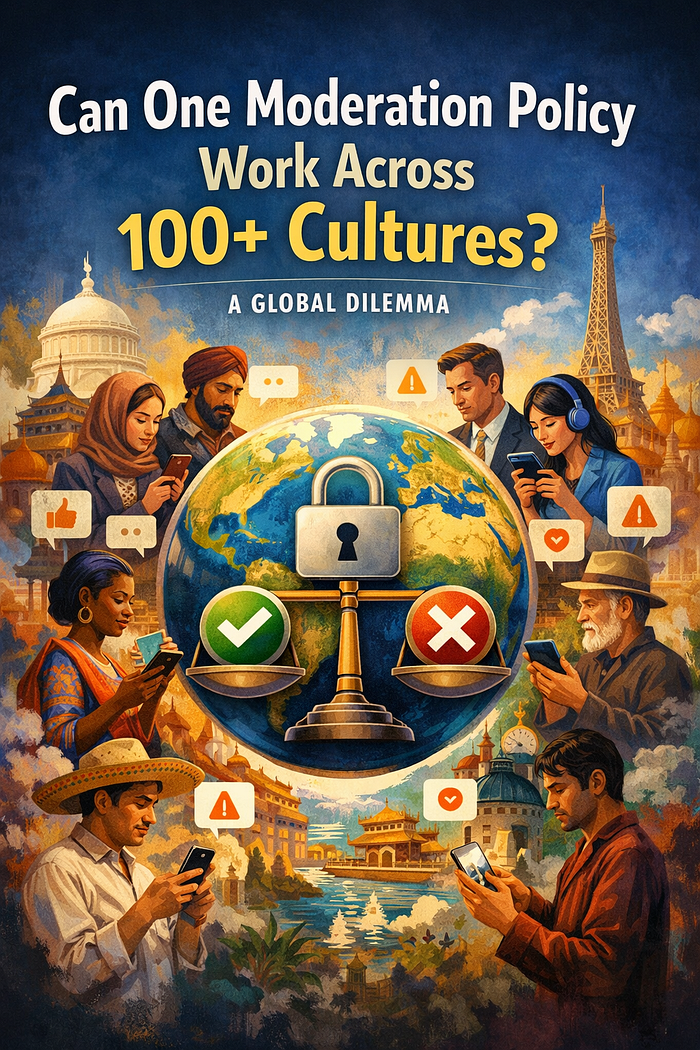
The Same Words Mean Different Things
One situation I remember clearly involved a phrase that looked harmless in English. It appeared in a comment thread and initially didn’t trigger any obvious violation.
But when a colleague familiar with the regional language reviewed it more carefully, the meaning changed completely.
In that local context, the phrase was actually a coded insult used frequently in online harassment.
If we had applied a literal interpretation of the policy, we might have allowed the content to remain. Cultural context changed the decision entirely.
Moderation policies may be global, but language rarely is.
Humor Doesn’t Travel Well
Another challenge appears when dealing with humor or satire.
In one queue, I reviewed a meme that had been reported as harassment. At first glance, it looked like typical internet humor. But several users from the same region reported feeling targeted by it.
After digging deeper, we realized the meme referenced a stereotype specific to that country. People outside that culture wouldn’t easily recognize it, but inside that community it carried a very different meaning.
Moments like this remind moderators that context is not universal.
A joke in one culture can be an insult in another.
Political and Social Sensitivities Differ
Moderation becomes even more complex when content touches politics or social identity.
In some regions, criticizing public figures is considered normal public debate. In others, similar statements may carry historical or cultural tensions that make them far more sensitive.
Moderators sometimes review posts that are acceptable in one country but extremely controversial in another.
Applying one global rule without understanding those differences can create enforcement that feels inconsistent or unfair.
Why Global Policies Still Exist
Despite these challenges, platforms still rely on global moderation policies.
Without a shared framework, enforcement would become chaotic. Each region would apply completely different rules, making it difficult to maintain consistent standards across the platform.
Global policies provide a baseline for safety: rules against harassment, exploitation, violent threats, and other harmful behavior.
But those policies often need local expertise to be applied correctly.
That’s why many Trust & Safety teams include regional specialists who understand language nuances and cultural context.
The Real Work Happens in the Interpretation
From the outside, moderation policies can look like fixed rules.
From the inside, they often function more like guidelines that require interpretation.
Moderators constantly ask themselves questions like:
Does this phrase have a hidden meaning?
Is this satire or harassment?
Is this content offensive globally, or only within a specific cultural context?
Those questions don’t always have simple answers.
Final Thoughts
The internet connects billions of people across cultures that don’t always share the same norms, humor, or sensitivities.
Expecting one moderation policy to perfectly fit every cultural context is unrealistic.
But with thoughtful interpretation, regional expertise, and careful judgment, Trust & Safety teams try to bridge that gap.
Because moderating the global internet isn’t just about enforcing rules.
It’s about understanding the people those rules affect.