The Announcement That Should Have Slowed Things Down
I remember the moment a ceasefire was announced.
News channels started reporting a pause in conflict. The tone shifted from urgency to relief. You would expect things to calm down, both offline and online.
But when I logged into the moderation queue, nothing had slowed.
If anything, it felt louder.
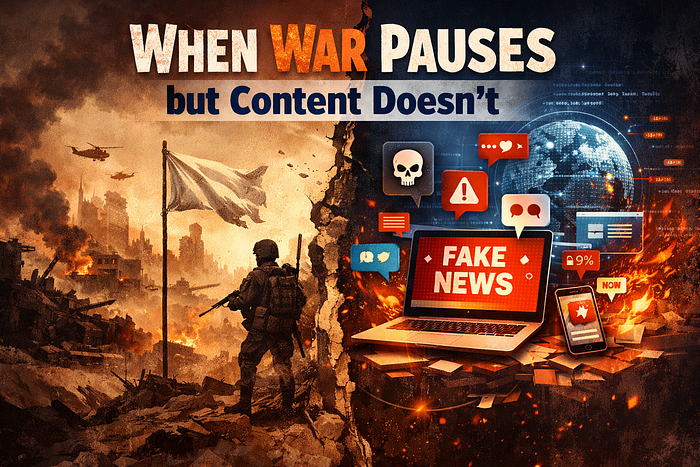
The Content Didn’t Get the Memo
Even after the official update, posts kept coming in at the same speed.
Videos of explosions, captions claiming “ongoing attacks,” and messages warning people to prepare for escalation.
I reviewed one clip that had already been circulating for hours before the ceasefire. It was now being reposted with a new caption:
“This just happened. Situation getting worse.”
The reality? It was old content, repurposed to fit a new narrative.
This is something I’ve seen often.
The event pauses. The content doesn’t.
Old Content, New Fear
During these moments, context becomes fragile.
A video from earlier in the day, or even from a previous incident, gets reshared as if it’s current. Screenshots lose timestamps. Voice notes lose origin.
I’ve handled clusters where the same piece of content appeared multiple times, each version slightly edited, each one more urgent than the last.
And for users, it’s hard to tell what’s real and what’s recycled.
The Second Wave of Panic
What surprised me most was the second wave.
Even after the ceasefire, new messages started appearing:
“Don’t trust the news.”
“This is temporary. Stock up while you can.”
This is where uncertainty takes over.
People don’t fully trust that the situation is stable. So they act “just in case.”
I’ve seen this lead to continued panic buying, crowded petrol pumps, and anxious conversations online.
The conflict may have paused, but the behavior continued.
Why Moderation Gets Harder
From a moderation standpoint, this phase is even more challenging.
Earlier, the focus is on high-risk, real-time content. Now, it shifts to context verification.
Is this video recent?
Is this claim outdated?
Is this creating unnecessary panic?
None of these are easy to answer instantly.
And while we assess, the content keeps moving.
The Gap Between Reality and Perception
One thing I’ve learned is that information doesn’t reset when events change.
There’s always a lag.
People process updates differently. Some accept the ceasefire. Others question it. Some ignore it completely.
And content reflects all of that.
I’ve seen timelines where official updates sit right next to misleading posts, both competing for attention.
What This Really Means
A pause in conflict doesn’t mean a pause in information flow.
In fact, it can create more confusion.
Because now there are two narratives: what’s officially happening, and what people believe is happening.
From the outside, it may look like mixed information.
From the inside, it’s expected.
Final Thought
War doesn’t just exist on the ground.
It continues through content, even when the situation changes.
From my experience, the hardest part isn’t handling active conflict. It’s managing the aftermath, where uncertainty lingers and old content keeps resurfacing.
Because while reality can pause, content doesn’t.
And in that gap, confusion continues to grow.