The Post That Looked Perfectly Fine
I remember reviewing a post that didn’t trigger a single automated flag.
A photo of a crowded petrol station. Caption: “Fuel finishing soon. Fill now.”
No hate speech. No explicit misinformation. No violation signals.
From an AI system’s perspective, it was clean.
But from experience, I knew this wasn’t harmless.
Within hours, posts like this can trigger panic, long queues, and real-world disruption. And I had seen it happen before.
That’s when it becomes clear.
AI can process content.
But it doesn’t always understand consequences.
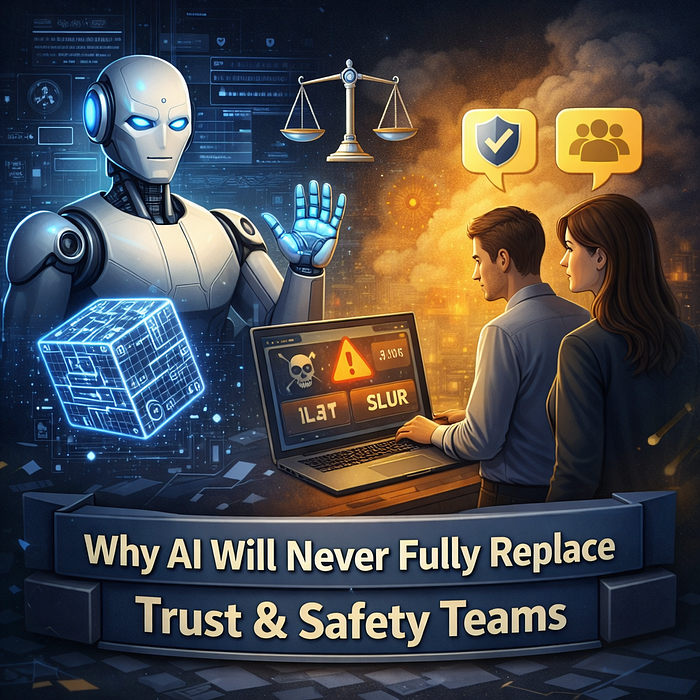
AI Understands Data. Humans Understand Context
AI moderation systems are trained to detect patterns.
Keywords, image signals, behavioral trends.
But during real-world crises, context matters more than patterns.
I’ve seen the same image mean completely different things depending on timing.
A crowded petrol pump during normal days? Routine.
The same image during a conflict or supply scare? A trigger.
AI doesn’t naturally understand why something matters in a specific moment.
Humans do.
Timing Is Everything, and AI Struggles With It
One of the biggest gaps I’ve observed is timing.
I reviewed a video once that showed panic buying at a supermarket. It was real, but it was from a previous incident.
It started circulating again during a new crisis, framed as current.
AI systems didn’t flag it. The content itself wasn’t harmful.
But in that moment, it was misleading.
Because timing changed its meaning.
From a Trust & Safety perspective, this is a critical gap.
And it’s not easy to automate.
The Gray Areas Are Where It Gets Hard
Most people think moderation is about obvious violations.
In reality, the hardest decisions sit in the gray area.
Posts framed as advice.
Speculation presented as concern.
Content that is technically true but contextually misleading.
I’ve spent time reviewing such posts where there’s no clear rule to apply.
AI struggles here because it needs defined boundaries.
But real-world situations don’t always provide them.
Human Behavior Isn’t Predictable
Another thing AI can’t fully account for is how people react.
I’ve seen small posts trigger large-scale behavior.
A few messages about fuel shortage leading to crowded petrol pumps. Images of those queues reinforcing the narrative. More people joining in.
This chain reaction is not always visible in the content itself.
It’s visible in behavior.
And understanding that requires experience.
AI Can Assist, But Not Decide Everything
To be fair, AI plays a crucial role.
It helps filter large volumes of content. It flags potential risks. It allows teams to operate at scale.
I’ve worked with systems that significantly reduce workload.
But I’ve also seen where they fall short.
Missing subtle context. Overlooking emerging patterns. Treating sensitive content as normal because it doesn’t match known signals.
That’s where human review becomes essential.
The Cost of Getting It Wrong
In Trust & Safety, mistakes have consequences.
Removing legitimate content can limit access to important information.
Allowing harmful content can lead to panic, misinformation, or real-world harm.
I’ve felt that pressure while making decisions.
Because sometimes, there isn’t a clear right answer.
Just a better judgment call.
And judgment is something AI is still learning.
The Invisible Work Behind Decisions
From the outside, moderation decisions may look simple.
From the inside, they’re layered.
Understanding context. Checking timelines. Evaluating impact. Considering how content might spread.
I’ve spent minutes, sometimes longer, on a single piece of content.
Not because it was complex technically.
But because it was complex contextually.
Final Thought: It’s Not a Competition
The question isn’t whether AI will replace Trust & Safety teams.
From what I’ve seen, it won’t.
Because the problem isn’t just about detecting content.
It’s about understanding people.
AI can scale operations.
Humans provide judgment.
And in a space where context, timing, and behavior define impact, that combination matters.
The future of Trust & Safety isn’t AI alone.
It’s AI working with people who understand what’s at stake.
Because behind every piece of content is not just data.
It’s a decision.
And decisions still need humans.