The Case That Didn’t Fit the Rule
There’s one type of moment in Trust & Safety that doesn’t leave you easily.
It’s not the obvious violations. Not the clear cases.
It’s the ones that sit in between.
I remember reviewing a post during a crisis. A photo of a crowded petrol station, captioned: “Fuel may run out soon. Be prepared.”
No direct claim. No clear misinformation. No policy trigger.
By the book, it was allowed.
But from experience, I knew what could follow.
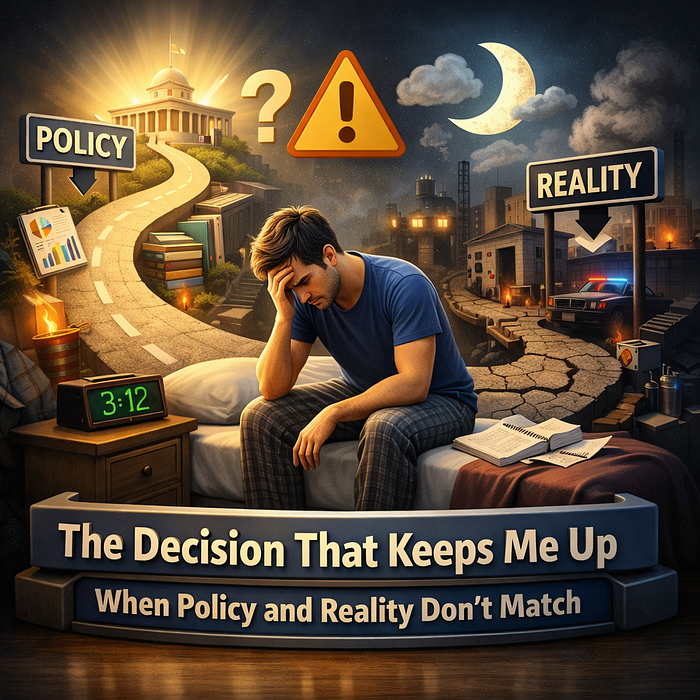
When Experience Conflicts With Policy
I had seen similar posts before.
Within hours, they led to panic buying. Long queues. People rushing to refill, not because of confirmed shortages, but because of fear.
That post, on its own, wasn’t harmful.
But it had the potential to become harmful.
And that’s where the tension begins.
Policies are designed to be consistent. They rely on defined categories, clear thresholds, and repeatable decisions.
Reality doesn’t work that way.
The Weight of a Single Decision
I remember hovering over the decision for longer than usual.
If I allowed it, it could contribute to a larger pattern of panic.
If I removed it, I might be acting beyond policy, setting a precedent that could affect similar content.
Neither option felt completely right.
This is something people rarely see.
Moderation isn’t always about knowing the answer.
Sometimes, it’s about choosing between two imperfect ones.
The Problem With “Individual Review”
Most moderation systems are built to assess content individually.
Does this post violate policy? Yes or no.
But harm doesn’t always come from a single post.
It comes from accumulation.
I’ve seen dozens of similar messages appear within minutes, each one adding a layer of urgency. Together, they create a narrative.
But individually, they don’t cross the line.
That gap between individual review and collective impact is where the hardest decisions live.
When Reality Moves Faster Than Policy
Policies are built over time. They evolve based on past patterns.
But during real-world crises, new patterns emerge quickly.
I’ve encountered situations where something felt risky, but there was no clear policy to act on it yet.
In those moments, you rely on judgment.
But judgment isn’t standardized.
And that creates inconsistency, something platforms try hard to avoid.
The Human Side of Moderation
There’s also a personal layer to this.
You don’t just review content. You observe outcomes.
You see how narratives form. How people react. How small signals turn into large consequences.
So when you encounter similar content again, it’s not neutral anymore.
It carries memory.
That memory influences how you see the next decision.
Even if the policy hasn’t changed.
The Trade-Off No One Talks About
There’s always a trade-off.
Allowing borderline content supports free expression but risks amplification.
Restricting it reduces potential harm but risks overreach.
I’ve felt that balance shift depending on the situation.
During high-risk moments, the cost of allowing something feels higher.
But acting too aggressively can also erode trust.
There’s no fixed line.
When the Outcome Isn’t Visible
One of the hardest parts is that you don’t always see the outcome of your decision.
Did allowing that post contribute to panic?
Did removing it prevent anything?
There’s no immediate feedback.
You move on to the next piece of content, carrying the uncertainty with you.
Why This Stays With You
Out of hundreds of decisions, most are routine.
But the borderline ones stay.
Because they force you to think beyond rules.
They force you to consider impact, timing, behavior.
And sometimes, they make you question whether the system is equipped for the situation.
Final Thought: The Space Between Rules and Reality
From the outside, moderation looks structured.
From the inside, it often feels like navigating gray areas.
Policies provide the framework.
Reality tests it.
And in between those two, there are decisions that don’t have perfect answers.
Those are the ones that stay with you.
Because in Trust & Safety, it’s not just about applying rules.
It’s about understanding when the rules don’t fully apply.
And deciding what to do anyway.