It Didn’t Matter Where the War Was
The first time I handled war-related content at scale, it was tied to one region.
Different language. Different geography. Different audience.
But the patterns felt familiar.
Months later, during another conflict in a completely different part of the world, I logged into my queue and saw the same behaviors again. Same type of posts. Same urgency. Same confusion.
That’s when it clicked.
Every war may be different on the ground.
But online, they start to look the same.
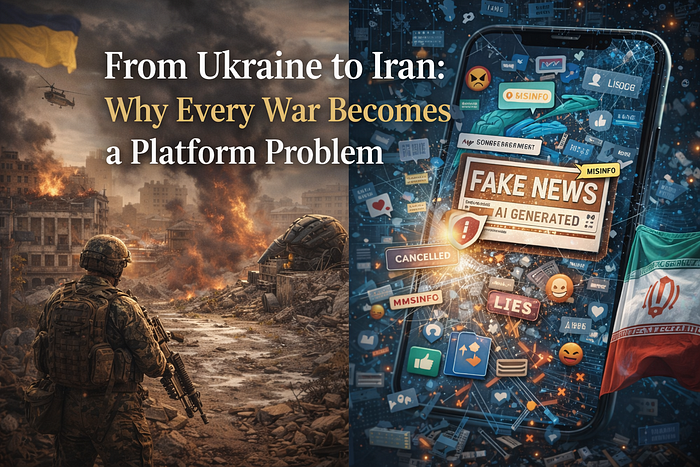
The First Layer: Real Events, Instant Uploads
Every conflict begins with real footage.
Missile strikes, damaged buildings, people recording what’s happening around them. Within minutes, these clips appear on platforms.
I’ve reviewed videos that were uploaded almost in real time. Raw, unedited, and often without context.
At this stage, the problem isn’t misinformation.
It’s incomplete information.
And that gap doesn’t stay empty for long.
The Second Layer: Context Gets Rewritten
Once content is online, interpretation begins immediately.
A single clip can carry multiple captions:
“Massive escalation.”
“Retaliation confirmed.”
“Breaking: situation out of control.”
I’ve seen the same video appear in my queue multiple times, each version telling a different story.
And here’s the issue.
The content is real. The narrative is not always.
This pattern showed up during multiple conflicts, where old footage or unrelated visuals were reshared as current events, confusing users at scale. ()
The Third Layer: AI Makes It Worse
What has changed in recent years is the role of AI.
During recent conflicts, I started seeing videos that looked too real. Perfect lighting. Clean visuals. Dramatic impact.
But something felt off.
Later, we identified many of them as AI-generated or heavily manipulated.
This isn’t a small problem.
Dozens of fake war visuals, including missile strikes and destroyed cities, have been found circulating widely online, often indistinguishable from real footage. ()
From a moderation standpoint, this changes everything.
Earlier, fake content had flaws. Now, it blends in.
The Fourth Layer: Platforms Become the Battlefield
At some point, the war stops being just physical.
It becomes digital.
Different actors start pushing narratives. Some are state-backed. Some are opportunistic. Some just want attention.
I’ve reviewed coordinated posts that looked organic but followed the same pattern. Same hashtags. Same timing. Same messaging.
Social media essentially becomes a battlefield for influence, where all sides try to shape perception and control the narrative. ()
And platforms sit right in the middle of it.
The Fifth Layer: Speed vs Truth
Here’s the part most users don’t see.
Speed always wins first.
During one shift, I tracked a viral claim about a major incident. Within minutes, it had thousands of shares.
Verification took longer.
By the time credible sources clarified the situation, the original claim had already reached millions.
This isn’t unusual.
False or misleading content often spreads faster than verified information, especially during high-emotion events. ()
And moderation is always trying to catch up.
The Sixth Layer: Real-World Impact
What makes this a platform problem, not just an information problem, is the impact.
People act on what they see.
I’ve seen rumors about fuel disruption lead to long queues at petrol stations. Messages about instability lead to panic buying. Old videos trigger new fear.
None of this is planned by platforms.
But it happens on them.
And once behavior moves offline, it’s harder to control.
Why Every War Feels the Same Online
After handling multiple incidents, one thing became clear.
The geography changes.
The language changes.
The actors change.
But the system doesn’t.
- Real content appears without context
- Narratives form instantly
- AI blurs reality
- Platforms amplify emotion
- People react before verification
That cycle repeats every time.
The Moderation Reality No One Sees
From the outside, it may seem like platforms should simply “control misinformation.”
From the inside, it’s more complex.
We’re not dealing with one type of content.
We’re dealing with:
- Real videos used misleadingly
- Fake videos that look real
- Opinions framed as facts
- Coordinated campaigns mixed with genuine users
And all of this is happening in real time.
At scale.
Final Thought: War Has a Second Front
War no longer exists only on the ground.
It exists on platforms.
From what I’ve seen, every conflict now has two fronts:
One physical.
One digital.
And the digital one doesn’t just reflect reality.
It shapes it.
That’s why every war, no matter where it begins, eventually becomes a platform problem.
Because in today’s world, controlling territory is one battle.
Controlling information is another.
And that second battle is happening on our screens, every single day.
- Will AI Replace Human Moderators? Inside the Real Future of Trust & Safety
- Can One Moderation Policy Work Across 100+ Cultures?
- AI Moderation Is Fast — But It Still Needs Humans to Clean Up
- Are Transparency Reports Actually Telling the Full Story?
- Speed vs. Accuracy: The Trade-Off Nobody in Trust & Safety Admits Out Loud